

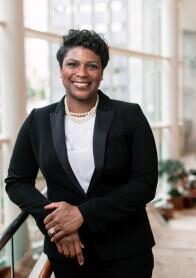
Rian Hasson Charles
Surgeon - Cardiothoracic
Dartmouth-Hitchcock Medical Center
1 Medical Center Drive, Lebanon, NH, 03756, United States
Research
I was the recipient of the Ruth L. Kirschstein Training Grant (T32), and spent two years as a basic science clinical research fellow with Dr. Monica Bertagnolli in the Division of Surgical Oncology at Brigham and Women’s Hospital and the Dana Farber Cancer Institute. During my time, I studied the role of estrogen in inhibiting intestinal tumor formation, tyrosine kinase regulation in desmoid tumors, and the effects of non-steroidal anti-inflammatory drugs (NSAIDs) on tumor resistance in Min/+ mice. Our laboratory also investigated adenomatous polyposis coli (APC) gene function and the role of inflammation in driving abnormal wound healing and tumorigenesis. In addition to building upon my repertoire of basic science techniques, I was involved in translational projects and investigated the role of aberrant crypt foci (ACF) as a surrogate endpoint biomarker in colorectal cancer chemoprevention.
During my time at The Ohio State Ross Heart Hospital Center for Cardiac Outcomes, and The James Cancer Hospital and Solove Research Institute, my research efforts were more clinical in nature. My interests included pulmonary influences on patients undergoing cardiac surgery for heart and lung failure; specifically patients with pulmonary hypertension, and those undergoing placement of Left and Right Ventricular Devices, Extracorporeal Life Support, and Heart and Lung Transplantation.
My future projects will transition to outcomes research investigating clinical problems that arise during the perioperative care of thoracic and foregut patients, the utility of various neoadjuvant and adjuvant treatment protocols for oncologic patients through clinical trials, and oncologic patient optimization through exercise training and nutrition improvements to improve 30-90 day survival. I am also very interested in translational oncologic research evaluating the “physiologic switch” within precursor lung lesions and inactivated circulating tumor cells that initiates transformation and spread into cancer. Specifically, I will investigate circulating markers of lung tumorigenesis, paying special attention to the differences observed in in-situ, malignant, and metastatic lesions. Ultimately, I will apply the results of my research to the betterment of current patient practice to improve the treatment of thoracic and foregut malignancies.
Additional Education Information
Education and Training
Education
May 2001 University of California, Berkeley
Bachelor of Arts Degree, Psychology
May 2003 Harvard College Extension School, Health Careers Program
Certificate in Premedical Studies
May 2008 Keck School of Medicine of the University of Southern California
Medical Doctorate, Dean’s Recognition (Dean’s List) 2006-2008
Clinical Appointments
Domestic Clinical Activities
2008-2009 General Surgery Intern, Brigham and Women’s Hospital
2009-2014 General Surgery Resident, Brigham and Women’s Hospital
2014-2015 Chief Resident, General Surgery, Brigham and Women’s Hospital
2015-2017 Cardiothoracic Surgery Fellow, The Ohio State University Wexner Medical Center
2016-2017 Chief Resident, Cardiothoracic Surgery, The Ohio State University Wexner Medical Center
2017-2018 General Thoracic Surgery Fellow, Mayo Clinic
2018-present Assistant Professor of Surgery, Dartmouth-Hitchcock Medical Center
International Clinical Activities
2005 Visiting Medical Student, Department of Surgery, Critical Care and Emergency Medicine, Hospital Carlos Andrade Marín Quito, Ecuador
SALUD Medical Spanish Program, Academia Latinoamericana
2007 Visiting Medical Student, Department of Surgery, Hospital William Allen Taylor; Turrialba, Costa Rica
AEC Medical Spanish Program, Centro Agronómico Tropical de Investigación y Enseñanza (CATIE)
2011 Delegate, American Public Health Association, Havana, Cuba
2015, 2016 Resident/Fellow Volunteer, Team Heart Cardiac Surgery, Kigali Rwanda
Research and Postdoctoral Appointments
2004 Clinical Research Assistant, Department of Anesthesia, University of California, Berkeley
2005-2008 Clinical Research Assistant, Department of Trauma and Critical Care, LAC + USC Medical Center and University Hospital
2007-2008 Clinical Research Fellow, Department of Surgery, Children’s Hospital Los Angeles
2010-2015 Postdoctoral and Clinical Research Fellow, Brigham and Women’s Hospital/Dana Farber Cancer Institute
2015-2017 Clinical Research Fellow, The Arthur G. James Cancer Hospital and Richard J. Solove Research Institute, The Ross Heart Hospital Center for Cardiac Outcomes
Practice Areas
Thoracic
Cancer
Chest wall
Esophagus
Professional Affairs
Lung
VATS
Mediastinum
Benign disease
Minimally Invasive
Pleura
Infection
Thoracic
Trachea and bronchi
Organizations
Published by Rian

Cancer, Episode
CTSNet To Go Podcast: Lung Cancer Screening – Health Care Disparities
By Virginia Litle et al.
Oct. 22, 2021
0
Cancer
Lung Cancer Screening – Health Care Disparities: Archived Webinar
By Virginia Litle et al.
Oct. 22, 2021